Entradas populares

Mostrando entradas con la etiqueta Review. Mostrar todas las entradas

16 abr 2023

Overkill: Scorched (Review)


New stuff evokes what is known 

and improves it whit what has been learned 

Scorched. 2023. Nuclear Blast

After 4 years since their last album and more than 4 decades of career, these Jersey devils are back and in the best way. It can be said that time does not pass by its members, but that would also throw away everything they have learned and know how to perform on their 20th album, Scorched.

Listening to the album is a journey, full of references and glimpses to previous moments of the band and tributes to legends like Black Sabbath (Fever) or Ronnie James Dio (Won't Be Coming Back). It is an album easy to enjoy thanks to the variety it offers. We can't say it has little bits for everyone… It has a lot!

The title track opens us with a melodic riff, almost a solo, very Heavy Metal and something that we hadn't heard before in any other work by the band which later leads to this formula of groovy thrash that we've been delivered to since The Grinding Wheel and that is refined in many aspects. It's an excellent opener that manages to give a glimpse that, within all the new stuff awaiting for us, that core still burns with green and red flames.

The Surgeon is another sample of a curious mix between thrash and Rock & Roll vibes that won't take away your impulse to shake your skulls. Wicked Place is a march, just like that. A mid-paced swing takes you rocking back to a decadent chorus and a bridge that becomes a bone crusher. Insane malice and perhaps even a little solemness with its ending. These were the three songs chosen to promote their work, and although they are remarkable, fortunately they are far from being the best this record has to offer.


The Surgeon Official Video

Twist of the Wick is without a doubt the first gem that shines above everything we've ever heard and it's the first track you're dying to hear again. It's got everything thrash demands as a tribute to be crowned an instant classic: an ominous intro, speed at its core, and that unique touch in the middle that makes you know who you're dealing with, it couldn't be anyone but. Overkill.

And, well, if the first gem was a display of speed and pure pounding, Fever is anything but the opposite. The speed is further decreased to drag you into a swamp full of sorcery and mystery, in which you can suffer from the mud on your feet that prevents you from moving freely. A door to hell has opened and it is located in the bayou where this song transports you in the purest Black Sabbath style. And as it couldn't be otherwise, Harder they Fall brings back to the equation this devilish speed as if you were in an almost derrailed roller coaster's car which tracks only go downhill underground. The most memorable chorus on the entire album and another track that goes straight to the pedestal of "must hear it live!". 

Know Her Name deserves its own niche within the crowded altar that is the band's discography. Without exaggeration, it is a song in which all the elements of the group merge but manage to be protagonists on their own.

Bag O' Bones leans much more towards that Hard Rock side that will delight those who enjoyed I Hear Black or Immortalis. Directly, it invites you to shake that skeleton, even if you are “far from home, you will never be alone”. As a closing, it is a surprise, but you cannot blame them for deciding put it last.

Special mention to the intro of Won't Be Coming Back, which is clearly a tribute to Ronnie James Dio's Holy Driver and which will delight NWOBHM lovers. That verse riff will bring back that nostalgia for a time that many of us haven't lived though, but one you can hear especially on Feel the Fire. And since we only have to talk about Goin ’Home, we can just say that it's the student who makes his homework and arrives to class on time; his main riff is full of evil and Brittner's drums shine here in a unique way. It's curious to classify these songs as the low moments of the trip, mainly because they will be liked by many and that only speaks excepcionaly high of the album as a whole.

The production is glorious, Colin Richardson (who returns to collaborate with the band since  Killbox 13, one of their best sound on a record) and Chris Clancy are responsibles for the mix, teaching how to bring that electrifying guitar tone from Wings of War in comunion with a massive (but not invasive) bass and a warmer drums that finally allow us to appreciate all what Jason Brittner is capable of in his second studio work with the band. Dave Linsk already has a repertoire of excellent solos and on this album he not only keeps his stamp of creativity and expressiveness, but even manages to surpass himself on several occasions.

Interestingly, there's an odd moment within The Surgeon during their first pre-chorus, where the mix goes a bit crazy (Might be some compression and EQ misstweaks to avoid double-kick overwhelming, perhaps?); something very unusual to hear in a production that manages to be as well cared for as this one and that, incredibly, is presented again at the beginning of the second section of Fever. It does not diminish anything and it is still an anecdotal fact, but it is clearly perceptible.

In conclusion, Scorched is a solid album, firmly based in roots that go further back than the band itself and that extend to the last second of the 51-minute recording, which feel "few" in comparison to what you experience. It is not a perfect album and although it is difficult to rank it in a specific position or to say that it exceeds everything done in more than 40 years of experience, it does manage to consolidate everything learned throughout a long and prolific career and that, without a doubt, surpasses Ironbound and The Electric Age as the most outstanding the band has achieved since The Years Of Decay or Horrorscope.

But, please, don't let this be a recommendation... it is an invitation!

Overkill: Scorched (reseña)

Lo nuevo evoca lo ya conocido y lo mejora con lo ahora aprendido


Scorched. 2023. Nuclear Blast

Después de 4 años desde su último álbum y con más de 4 décadas de carrera, estos diablos de Jersey están de vuelta y de la mejor manera. Puede decirse que el tiempo no pasa por sus integrantes, pero eso también echaría en saco roto toda lo que han aprendido y saber ejecutar en su vigésimo álbum, Scorched.

Escuchar el álbum es un viaje, lleno de referencias y guiños a momentos anteriores de la agrupación y de homenajes a leyendas como Black Sabbath (Fever) o Ronnie James Dio (Won’t Be Coming Back). Es un disco que es fácil de disfrutar gracias a la variedad que ofrece. No podemos decir que tiene un poco para todos… ¡Tiene mucho!

El titular nos abre con riff melódico, es casi un solo, muy Heavy Metal y algo que no habíamos escuchado anteriormente en ningún otro trabajo de la banda y que luego nos da lugar a esta fórmula de thrash con tintes groovy a la que nos han tenido acostumbrados desde The Grinding Wheel y que se muestra refinada en muchos aspectos. Es un excelente abridor, que logra dar un vistazo de que, dentro de lo nuevo, ese núcleo sigue ardiendo con llamas verdes y rojas.

The Surgeon es otra muestra de esa curiosa mezcla entre el thrash y unas vibras de Rock & Roll que no te quitarán el impulso por sacudir el cráneos. Wicked Place es una marcha, así, sin más. Un swing cadencioso te lleva nuevamente a mecerte a un decadente coro y a un puente que se convierte en una trituradora de huesos. Malicia demencial y, quizás, hasta un poco solemne con su final. Estos fueron los tres temas elegidos por la banda para promocionar su trabajo, y si bien, son temas decentes, afortunadamente están lejos de ser lo mejor que este disco tiene que ofrecer.


Video oficial de The Surgeon

Twist of the Wick es, sin duda, la primera gema que resplandece por encima todo lo que hemos escuchado y es el primer tema que mueres de ganas por volver a escuchar. Tiene todo lo que el thrash exige como tributo para coronarse como un clásico instantáneo: un intro ominoso, velocidad en su núcleo y ese toque único a la mitad que te hace quitarte de dudas de con quién estás tratando, no podría tratarse de nadie más que Overkill.

Si bien la primera joya era una muestra de velocidad y vapuleo, Fever es todo lo contrario. La velocidad se disminuye aún más para arrastrarte a un pantano lleno de hechicería y misterio, en el que puedes sufrir el fango en tus pies que te impide avanzar con libertad. Una puerta al infierno se abrió y se encuentra en el bayou al que te transporta esta canción al más puro estilo de Black Sabbath. Y como no podría ser de otra manera, Harder they Fall trae de vuelta a la ecuación la velocidad endiablada como si estuvieras en un carrito de montaña rusa cuyos rieles sólo van cuesta abajo. El coro más memorable de todo el álbum y otro tema que va directo al pedestal del “debes oírla en vivo”.

Know Her Name merece su propio nicho dentro del altar tan apretujado que es la discografía de la banda, sin exagerar, es un tema en el que todos los elementos del grupo logran ser protagonistas.

Bag O’ Bones se inclina mucho más hacia ese lado Hard Rock que hará las delicias de quienes disfrutaron de I Hear Black o Immortalis. Directamente, te invita a sacudir ese esqueleto, incluso si estás “lejos del hogar, nunca estarás solo”. Como cierre, es una sorpresa, pero tampoco se les puede reprochar decidir colocarla al final.  

Mención especial al intro de Won’t Be Coming Back, que es a todas luces un homenaje a Holy Driver de Ronnie James Dio y que hará las delicias de los amantes de NWOBHM. Ese riff del verso traerá de vuelta esa nostalgia por una época que muchos no hemos vivido, pero que puedes escuchar sobre todo en Feel the Fire. Y como sólo nos queda hablar de Goin’ Home, sólo podemos decir que es el alumno que cumple con la tarea y llega puntual a clases; su riff principal está lleno de maldad y la batería de Brittner brilla de una forma especial. Es curioso puntuar estos temas como los momentos bajos del viaje, porque serán del agrado de muchos y eso no hace más que hablar muy bien del álbum como un todo.

La producción es gloriosa, Colin Richardson (quien vuelve a colaborar con la banda después de Killbox 13, uno de sus mejores productos en cuanto a sonido) y Chris Clancy son los responsables de la mezcla y ésta enseña cómo llevar ese tono electrizante de guitarra que se escuchó en Wings of War a una comunión con un bajo masivo, pero no invasor) y una batería más cálida y que por fin nos deja apreciar mejor todo de lo que es capaz Jason Brittner en su segundo trabajo de estudio con el grupo. Dave Linsk ya cuenta de por sí con un repertorio de solos excelentes en la banda y en este disco no sólo mantiene su sello de creatividad y expresividad, sino que logra hasta superarse en varias ocasiones.

Curiosamente, existe un momento extraño dentro de The Surgeon durante su primer pre-coro, en el que la mezcla se vuelve un poco loca, quizás algún truco de compresión y ecualización para evitar la saturación del doble bombo; algo muy inusual de escuchar en una producción que logra ser tan bien cuidada como esta y que, increíblemente, vuelve a presentarse al inicio de la segunda sección de Fever. No echa a perder nada y no deja de ser un dato anecdótico, pero sí es perceptible.

En conclusión, Scorched es un disco sólido, cimentado fuertemente en raíces que van más atrás de la propia banda y que se extienden hasta el último segundo de los 51 minutos de grabación, los cuales son “pocos” en comparación a lo que experimentas al escucharlo. No es un álbum perfecto y aunque es difícil asignarle un puesto específico dentro del ranking o decir que supera todo lo hecho en más de 40 años de trayectoria, sí logra consolidar todo lo aprendido a lo largo de una larga y prolífica carrera y que, sin lugar a dudas, supera a Ironbound y The Electric Age como lo más sobresaliente que la banda ha logrado desde The Years Of Decay o Horrorscope.

Pero que esto no sirva como una recomendación... ¡es una invitación!

7 ago 2022

Axis - Unholy Resurrection (Review)


2022 Unholy Resurrection.

This is the first LP of the Mexican band Axis, who are not newbies, since they have been around for a few years and they show it with this cornerstone called Unholy Resurrection. A thrash with overtones of various other corners of metal such as black and groove (only at specific moments) but that does not detach itself from their main vein and offers us the perfect excuse to destroy yourself in the moshpit.

The mix is highly processed but, fortunately, enough to not (barely) feel like a compressed block of concrete, mostly like a solid cliff, a stone wall with cracks that give it that authentic overall tone. The drumming is captivatingly accurate, tight and has massive sound. The guitars and the bass tones is malevolent, menacing and fierce, but at the same time, it shows that it was a very cared feature of the whole result. The voice is an explosion of anger and evil that resonates throughout the songs as if it came from those cursed and prophane stone walls of the cliff. The riffs always hit the mark on their own, they're arranged as each song needs them, managing to create a perfect picture of atrocity, malice and despair. If there was one way to describe it, it would be with a journey through devilish and insane settings.

The experience when listening to the complete album is like entering a remote place in the mountains, a place where you already know that the bloodiest and most ruthless rituals take place, that sharp rocks, treacherous trails and desolate landscapes await you; but still you keep going because the promise of what you will find in the end. The album never disappoints, it really has no weak points and as you discover each passage, each more sinister than the previous one, you arrive at a macabre but captivating place before it closes with a flourish in which the ground cracks to open the doors of the same hell to which you are heading in free fall.

While the title track is certainly the core that encompasses the whole concept of what the band offers in this production, which together with "Cruciatibus Aeternam" and "Axis" form a truly unholy trinity on which the rest of the material is built, which expands like roots of a rotten tree in different twisted directions.

An instant favorite is “Domination Routine”, whose sections are seared into your flesh, with one of the most mesmerizing guitar solos of the album, followed by a surprise bass solo that delights the moshpit, just like “Altered Beast”, which is an evil and wild blast that becomes an epic piece on its own, is that theme that you are dying to experience live.

"Hate Game/The Punishment" grabs you by the skull and shakes it at its will, demonstrating that it really doesn't take too much to hypnotize a crowd eager to tear itself apart once the track really kicks in and turns into a merciless collection of riffs that lets you a glimpse of those sharpened edges of a sinister pentagram hidden in the darkness.

Back to the title track, is another example of that core of pure and hard battering that transforms into a maelstrom that plunges you into tides of chaos that paints a picture of sharp stones unwelcoming shores and a dark and hopeless sky. You feel like you're falling down in the same way that "Contradiction" pulls you into the depths, but even deeper than those tides, to an abyss below the ground, full of fire and endless desolation.

The album as a whole is pure evil written in stone and fire, brilliant from start to finish. As said before, it is difficult to find something to criticize, there are no filler, there is no rest but it does not become a repetitive or tiresome experience at all. Axis manages to carve out an identity with a very violent yet polished old school thrash style. A formula that doesn't need to be innovative to quench that bloodlust of yours, but who really needs complexity or intricate twists when you have a performance that sounds this perfect? Certainly not these guys.

The album is available directly through the band social media sites. Go and support them on:

Facebook

Instagram

Listen to Unholy Resurrection on 

Youtube

Spotify

Axis - Unholy Resurrection (reseña)

2022 Unholy Resurrection.

Este es el primer LP de la banda mexicana Axis, quienes no son unos novatos, pues ya tienen unos años de existir y lo demuestran con esta piedra angular que se llama Unholy Resurrection. Un thrash con tintes de varios otros rincones del metal como el black y el groove (en momentos puntuales) pero que no se despega de su vena principal y nos ofrece la excusa perfecta para destrozarte en el moshpit.

La mezcla está muy procesada pero, afortunadamente, lo suficiente para (apenas) no sentirse como un bloque comprimido de concreto, si a lo mucho, como un despeñadero macizo, con grietas que le dan ese carácter de autenticidad. La batería es cautivadoramente precisa y suena masiva. El tono de las guitarras y el bajo es malévolo, amenazante y encarnizado, pero a la vez, se nota que es un aspecto muy cuidado para el resultado final. La voz es una explosión de ira y maldad que resuena a lo largo de las canciones como si proviniera de esos muros de piedra malditos y profanos del despeñadero. Por su parte, los riffs dan al clavo de lo que cada tema necesita, logrando crear una estampa perfecta de atrocidad, malicia y desesperanza. Si hubiera una manera de describirlo, sería con un viaje a través de escenarios endemoniados y demenciales.

La experiencia al escuchar el disco completo es como adentrarte en sitio apartado en las montañas, en donde sabes que tienen lugar los rituales más sangrientos y despiadados, que te esperan rocas afiladas, senderos traicioneros y parajes desolados; pero aun así, sigues adelante porque la promesa de lo que encontrarás al final. El álbum no decepciona en ningún momento, realmente no tiene puntos débiles y conforme descubres cada pasaje, cada uno más siniestro que el anterior, llegas a un lugar macabro pero cautivador antes de que éste cierre con un broche de oro en el que el suelo se quiebra para abrir las puertas del mismo infierno al que te diriges en caída libre.

Mientras que el tema titular es ciertamente la médula que engloba todo el concepto de lo que ofrece la banda en esta producción, que junto a "Cruciatibus Aeternam" y "Axis" forman una trinidad impía sobre la cual se sostiene de manera firme el resto del material, que se expande como raíces de un árbol podrido para distintas direcciones.

Una favorita instantánea es “Domination Routine”, cuyas secciones se te quedan grabadas en la carne, con uno de los solos de guitarra más hipnotizantes, seguido de un sorpresivo solo de bajo que hacen la delicia del moshpit, al igual que "Altered Beast", que es una ráfaga maligna y salvaje, que se convierte en una pieza épica por cuenta propia, es ese tema que mueres por experimentar en vivo.

"Hate Game/The Punishment" te toma del cráneo y lo sacude a su merced, es una muestra de que no se necesita mucho para logar hipnotizar a una multitud ansiosa por destrozarse una vez que el tema inicia de verdad y se vuelve inmisericorde, una colección de riffs que cuenta con aristas oscuras de un pentagrama siniestro escondido entre la oscuridad.

El titular es otra muestra de ese núcleo de palizas puro y duro que se transforma en una vorágine te sumerge en una marea de caos que pinta un cuadro de piedras afiladas y un cielo oscuro y sin esperanzas. Sientes que vas en una caída de la misma manera en que “Contradiction” te jala hacia las profundidades, pero aún más profundo que esas piedras, a un abismo por debajo del suelo, lleno de fuego y desolación.

El álbum como un todo es pura maldad grabada en piedra y fuego, brillante de inicio a fin. Como se dijo antes, es difícil encontrar algo criticable, no hay temas de relleno, no hay descanso pero tampoco se convierte en una experiencia repetitiva o cansina. Axis logra hacerse de una identidad con un estilo de thrash de la vieja escuela muy violento pero pulido a la vez. Una fórmula que no necesita ser innovadora para saciar esa sed de sangre, pero ¿quién necesita complejidad o giros de tuerca intrincados cuando tienes una ejecución que suena así de perfecta? Ciertamente, no estos chicos.

El disco está disponible directamente con la banda a través de sus redes oficiales Apóyalos en:

Facebook

Instagram

Escúchalo en

Youtube

Spotify

13 abr 2022

Reseña: Next - Silencio Nocturno (1989)

 Refinando la fórmula

1989 Silencio Nocturno. Portada de la versión Avanzada Metálica

Volvemos para escuchar el segundo asalto de los Patos de Next. En este caso, se les une el bajista Héctor Morales para poder conformar un cuarteto que muestra una evolución a la fórmula de su primer disco y nos entregan Silencio Nocturno.

El grupo nos vuelve a entregar un buen álbum de sólido thrash que inmediatamente te traslada a esa época dorada a finales de los 80’s. Aquí no hay giros de tuerca progresivas ni exhibicionismo innecesario, pero sí hay una fórmula que funciona y suena de maravilla. La adición del talento de Morales en el bajo es precisa y añade un poco de “color” en secciones donde sorprende y ayudan a que los riffs de guitarra no suenen planos. El trabajo de Erick en la batería es pulido y maduro a nivel de un músico que comprende exactamente lo que el tema necesita y añade redobles solamente en momentos justos. Esto calza de maravilla con los temas, alternando la velocidad y fiereza con acentos puntuales que acompaña a estos riffs que nos presentan Carlos y Sergio en unas guitarras cuyo tono tiene dos cualidades, suenan afiladas pero bastante claras. No obstante, hay algo en la mezcla de las guitarras que no sólo resulta un poco cansado conforme avanza el disco sino que en ocasiones rivaliza en volumen con la voz de Carlos y que pierde un poco de protagonismo en los solos, una cosa es silenciar los medios en el amplificador, pero a veces uno se pasa de la raya al extender esa ecualización a toda la mezcla final.

Hay muy buenos riffs en el disco y que con justa razón hicieron de sus canciones algo que se te queda pegado en la cabeza. Hay un poco más de experimentación, y es que aprovecharon la nueva alineación con dos guitarras con las armonías por aquí y por allá. De nuevo escuchamos solos de guitarra que no acostumbran a extenderse más de la cuenta, a veces muy acertados y a veces, poco inspirados; por otro lado, es quizás por la ecualización en la mezcla que se pierden dentro del sonido del resto de la banda y se sienten como un grafiti en la pared en vez de un cuadro enmarcado que sale de ella.

El álbum nos recibe con una primera mitad conceptual, Carlos Alanís, vocalista y líder de la agrupación, quien pasó de ser bajista a tomar la segunda guitarra, ha mencionado que se basaron en la película Alcatraz. Por lo cual, escucharemos la travesía desde El Juicio, que se convierte en un estandarte de la banda con ese riff principal simple pero icónico desde la primera vez que lo escuchas. Nos abrimos a una experiencia que va alternando velocidades y complejidad, tras la cual experimentamos a la desesperación claustrofóbica del encierro (Poco Tiempo), la determinación y el proceso de fugarse (Vamos a Escapar), para así reflexionar sobre las consecuencias de haber cumplido una condena (Mirando hacia atrás). Algo que incomodará a quienes busquen una narrativa lineal y consistente será la línea “esa condena ya la cumplí”, pero es demasiado rebuscado pensar en ello como para considerarlo dentro de una crítica seria al álbum.

Para el cierre de la primera mitad, nos recibe una intro de sintetizadores bastante ominoso y un mensaje invertido (“Se cumplió el destino de la humanidad. La herencia de la humanidad es este mundo mutante”). Mundo de mutantes no sigue con la historia de la prisión, pero sí da continuidad a las dos partes de Holocausto en su primer disco con un pasaje horroroso más fantasioso; lo cual dista bastante del realismo crudo que nos encontraremos en el resto del disco. Con respecto a temática, no hay queja alguna; aunque hay que reconocer que la escritura no es un fuerte este álbum, pero tampoco es algo que dilapide todo lo demás.

La segunda mitad del disco sería quizás la más pesada con el tema que da título al álbum y Cámara de Gas, que ofrecen pasajes con narrativas oscuras y crudas, acompañados de riffs inmisericordes que los convirtieron inmediatamente en clásicos. Todo este escenario de muerte se ve interrumpido por una pieza instrumental y acústica bastante atrapante, Norma Jean Baker no fue solamente el nombre de pila de esa atractiva rubia que conquistó el mundo de su época rebautizada como Marilyn Monroe; también es una pieza de música de ensueño, bella aunque algo melancólica. Finalmente, Dipsomanía es un poco más relajada pero cuenta con un riff descarnado antes de su breve solo, así como su break-down demoledor que cierran con broche de oro una experiencia sumamente gratificante, un álbum que goza de una cota de una manufactura de alta calidad y que además está lleno de temas memorables.  

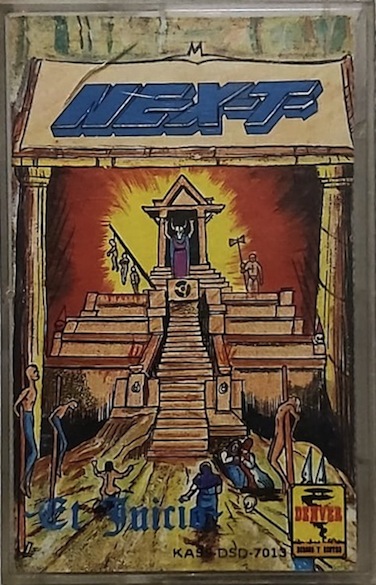
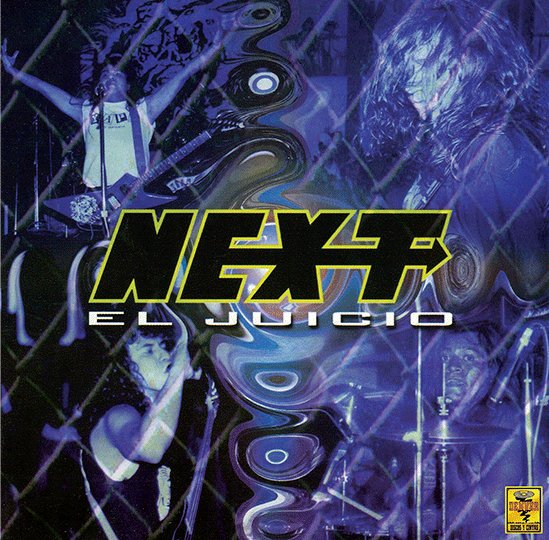
Silencio Nocturno fue el primer nombre que recibió este álbum, pero posteriormente, la compañía Discos y Cintas Denver lo rebautizaron con el nombre de El Juicio y hasta lo llegaríamos a ver en una compilación junto al disco anterior de la banda y bajo el título La Colección.


1989 El Juicio. Discos y Cintas Denver únicamente lanzada en formato casete

1991 La Colección. Acolado de Avanzada Metálica con los primeros dos discos de la banda y reeditada en 2019 por Moon Records


2001 El Juicio. Discos y Cintas Denver. 
Actual versión disponible en CD a través de Denver.


Personal

Carlos Alanís                      - voz y guitarra

Sergio Alanís                      - guitarra

Erick Alanís                         - batería

Héctor Morales                   - bajo


Review: Next - Silencio Nocturno (1989)


Refining formula 
1989 Silencio Nocturno. Avanzada Metálica version cover

We are back to listen to the second round of the Patos (Ducks) from Next. In this case, bassist Héctor Morales joined and the trio became a quartet that shows an evolution to the formula of their first album and they give us Silencio Nocturno (Night Silence).

The group returned with a good album of solid thrash that immediately takes you back to that golden age in the late 80's. There are no progressive twists or unnecessary exhibitionism here, but there is a formula that works and sounds great. The addition of Morales' talent on the bass is precise and he adds a bit of “color” in sections where he surprises and helps the guitar riffs not sound flat. Erick's work on the drums is polished and mature to the level of a musician who understands exactly what the song needs and adds fills only at the right moments. This fits wonderfully with the themes, alternating speed and fierceness with punctual accents that accompanies these riffs that Carlos and Sergio present us on guitars whose tone has two qualities, they sound sharp but quite clear. However, there is something in the mix of the guitars that turns tyring to hear as the album goes by, and they even rival Carlos's voice in volume sometimes but lose a bit of presence in the solos, one thing is to silence the mids in the amp, but sometimes you go overboard by extending that EQ to the entire final mix.

There some pretty good riffs on the album and with good reason they made their songs something that sticks in your head. There is a little more experimentation, and that is that they took advantage of the two guitarists dynamic with harmonies here and there. Again we hear guitar solos that don't usually go on longer than necessary, sometimes very successful and sometimes, a bit uninspired; on the other hand, it might be due to the equalization in the mix that they get lost within the sound of the rest of the band and feel like a graffiti on the wall instead of a framed painting coming out of it.

The album welcomes us with a conceptual first half, Carlos Alanís, vocalist and frontman, who takes the second guitar duties after playing bass on the past album, has mentioned that they were based on the 1973's film Alcatraz. Therefore, we will listen to the journey from El Juicio (The Judgement), which becomes a banner of the band with that simple but iconic main riff from the first time you hear it. We open ourselves to an experience that alternates speeds and complexity, after which we experience the claustrophobic desperation of confinement (Poco Tiempo [Little Time]), the determination and the process of escaping (Vamos a Escapar [Let's escape]), in order to reflect on the consequences of having fulfilled a sentence (Mirando hacia Atrás [Looking back]). Something that will bother those who are looking for a linear and consistent narrative will be the line “I already served that sentence”, but it is too far-fetched to think about it to consider it within a serious critique of the album.

To close the first half, we are greeted by a rather ominous synth intro and an inverted message (“The destiny of humanity has been fulfilled. The heritage of humanity is this mutant world”). Mundo de mutantes (World of Mutants) doesn't continue with the story of the prison, but it does continue the two parts of Holocaust on its first album with a more fanciful horrific passage; which is far from the crude realism that we will find in the rest of the album. Regarding the theme, there is no complaint; although we must admit that the lyric writing is not a strong point on this album, but neither is it something that collapeses everything else either.


The second half of the album would be perhaps the heaviest with the album's title track and Cámara de Gas (Gas Chamber), which offer passages with dark and raw narratives, accompanied by merciless riffs that immediately made them classics. All this death scenario is interrupted by a quite captivating instrumental and acoustic piece, Norma Jean Baker was not only the first name of that attractive blonde who conquered the world at the time when she was renamed Marilyn Monroe; it is also a dreamy piece of music, beautiful if somehow melancholic. Finally, Dipsomania is a bit more relaxed but it has a raw riff before its brief solo, as well as its devastating break-down that closes with a flourish an extremely gratifying experience, an album that enjoys a level of high-end manufacturing quality and that is also full of memorable themes.

Silencio Nocturno was the first name given to this album, but later, the company Discos y Cintas Denver renamed it El Juicio and we would even see it in a compilation together with the band's previous album and under the title La Colección


1989 El Juicio. Discos y Cintas Denver released only on cassette. 

1991 La Colección. Avanzada Metálica 
Compilation with the band's first two albums and rerelased in 2019 by Moon Records


2001 El Juicio. Discos y Cintas Denver. 
Actual available CD version via Denver.


Personnel

Carlos Alanís                      - vocals and guitar

Sergio Alanís                      - guitar

Erick Alanís                         - drums

Héctor Morales                   - bass

27 feb 2022

Reseña: Pactum - Ficción, Lujuria y Blasfemia


Lujuria, Ficción y Blasfemia. 1992. Avanzada Metálica

Tu infierno, su Paraíso

Pocos álbumes cuentan con un trasfondo interesante como este. Ficción, Lujuria y Blasfemia es el primer LP de la banda mexicana Pactum. Este disco fue lanzado al público a través de Avanzada Metálica en 1992, 3 años después de su EP homónimo, producido por ellos mismos. Sin embargo, tuvo que enfrentar bastantes problemas para ser lanzado al público debido a algunos títulos de sus temas y al propio contenido de sus letras. Es ya conocido entre los fans cómo el álbum tuvo que venderse con una carátula en la que no se leyera el título y rodeado de una funda blanca, con una contraportada en la que sólo figuraría la leyenda “CONTIENE 11 CANCIONES”. 


Nos encontramos ante otra muestra de la precariedad con la que se producían los discos en Avanzada Metálica; algo que para los audiófilos será una tortura de escuchar pero que para los fan hardcore del thrash y el black metal hará las delicias. No hablamos solamente de la forma en que los platillos de la batería de Woltan Campos sobrevuelan al resto de instrumentos, sino la forma en que fueron grabadas las guitarras de Antonio Porcayo y el bajo a cargo de Alejandro Ortiz. 


Dejando de lado la calidad de audio, tenemos con un trabajo muy interesante por parte de una banda que ya contaba con 6 años de existir, que también venía de haber producido su propio EP y esto se nota. Los riffs de guitarra son acompañados de forma envolvente por la batería y el bajo. Algo que hemos de agradecer es que el bajo no está enterrado en la mezcla, lo que nos permite apreciar cómo el trabajo de Ortiz brilla por cuenta propia y es gracias a que no sólo se limita a copiar las líneas de Porcayo, sino que cuenta con varios fills y solos que añaden una dimensión extra a la ecuación. Los solos de guitarra son contados y breves, pero llenos de expresividad y que no abusan de un shredding que no se necesita. No son algo que se eche mucho en falta mientras se escucha el álbum y que esto no se interprete como si éstos estén mal ejecutados o sean aborrecibles, para nada; simplemente, están colocados de forma puntual conforme la ocasión lo amerite (por poner un ejemplo, "Tu Infierno, mi Paraíso"). La voz de Luís Castillo suena descarnada, como gruñidos atonales de una sombra maligna y enfurecida, rayando en susurros desgarrados que, aunque no resaltan en técnica, encajan con el ambiente decadente y agresivo. La sonido de la batería de Campos es un desastre, quizás como resultado de malas decisiones al momento de la grabación, pero que deja entever que su trabajo logra estar a la altura del resto de la música. Hay cierta actitud por parte de la banda como un todo durante el disco, desde amplias secciones instrumentales hasta apabullantes sesiones llenas de ira y velocidad (como en "Eyaculando Sangre")


Si bien tenemos que admitir que la atmósfera opresiva, la interpretación vocal de Castillo y el contenido lírico nos hacen pensar en black metal; estamos hablando de un álbum de thrash en escencia, eso sí, uno bastante ennegrecido. Una paliza musical que acompaña a unas letras controvertidas e irreverentes, que siempre buscan (y logran) provocar. Hablamos desde contenido blasfemo y abiertamente anticristiano, hasta canibalismo ("El Búnker"), abuso de sustancias y varias cotas de un hedonismo llevado al extremo mediante prácticas rituales cuestionables. Pese a no abordar temas que normalmente te ayudarían a iniciar una conversación casual, logran ser suficientemente cautivadoras mientras las escuchas ("Yo soy Dios" y "Escupiendo a la Biblia", por ejemplo). No es algo que le mostrarías a tu tía Concepción, pero su mérito radica en que tampoco llegan al extremo opuesto de repelerte o aburrirte, al grado de que se convierten en un gusto (no tan) culposo. 


Algo que cabe destacar es la creatividad de las composiciones, pues al ser en su mayoría temas muy cortos de menos de 3 minutos, muchos de sus pasajes son únicos, lo cual se convierte en una rapsodia de oscuridad cruda con muy contados coros. Resaltan casos como "Antiprocreación", que es el tema más extenso y que cuenta con varias secciones diferentes o "Parricidio", que alterna partes psicodélicas con un intermedio salvaje. A veces, uno tiene la oportunidad de interpretar cómo se crea y se desenvuelve este caos. "La ira de la razón" comienza como una marcha y va degradándose sin que te des cuenta de ello y llegues al coro final con el que cierras todo este viaje a través de la cueva de poco más de 30 minutos a la que entraste escuchando "Yo Soy Dios". 


Encontrar puntos bajos es algo que se muestra difícil mientras más lo escuchas, cada tema tiene sus destellos, pero cabe admitir que "Alaridos de Placer" podría ser la única pieza débil de todo el disco, sin nada realmente memorable (pese al coro), aunque en gustos se rompen géneros y que esto sirva para demostrar todo lo demás que te puedes encontrar en el resto del álbum. Como se señaló, no es un material que les encantará a todos desde el principio, pero es un trabajo al que se le agarra el gusto después de un par de escuchadas. ¿Redomendado? Claro que sí.


Personal

Luís Castillo             - Voz

Woltan Campos     - Batería

Antonio Porcayo     - Guitarra

Alejandro Ortíz            - Bajo


12 oct 2021

Review: Six Beer - Lengua de Serpiente (1989)


Origianal cover for 1989 EP, EMI Capitol de México. 
Reedited as limited edition CD by American Line Productions.

 When the music turned "metálica"

We bring another debut from one of the pioneering bands of the genre in Mexico: Six Beer from Querétaro City. In this case, a quintet of brothers, Gerardo (vocals), Ricardo (guitar and backing vocals), Rogelio (bass) and Fernando (drums) Mendoza Rangel, along with guitarist Antonio Martínez Guerrero; they managed to stand out with a powerful proposal and with a quite defined style of what we could hear from other bands of the time. The version we reviewed here is the one Discos y Cintas Denver published, which includes 3 bonus songs: El Wine, Celda Negra and Muerte y Destrucción.|

We find a material which production, by the standards we are used to hear from the first albums in Avanzada Metálica, sounds quite clean and powerful, as expected considering that this EP was produced by Luzbel's Greñas. The tone of the guitars is less distorted than you might expect, although it suits the restrained and careful style that the album has in general. But something different happens with the guitar solos, which are mostly short, but charged with energy and which help to create a threatening and epic atmosphere at times with those arrangements with dive-bombs from time to time. Of the riffs themselves, they are simple but creative, powerful and if they are not malicious (just listen to the title track), they manage to make you headbang in camaraderie with them. And they are accompanied by a drums that make them sound like a locomotive which they don't stop adding coal to from the beginning to the end thanks to Fernando's work. It is necessary to mention that it is in the first song in which the mix manages to do justice to the drum work, since it is buried a bit in the rest of the album. It's also a shame that the bass lines can't be fully appreciated in the recording beyond the punch in the mix.

The style of the album as a whole fits more into the label of Heavy Metal with overtones of thrash than a purely thrash material. It begins by punching violent and full of brute force, however, this feeling is not kept throughout the recording. Let's take a look at the song 'Metálica' as well as the bonus 'El Wine', both with less serious lyrics and made to enjoy with the audience, with a strong orientation towards a Glam that makes you think of Pantera's first albums (before Phil Anselmo) than in the decadent and furious style heard at the beginning of the album. And they are not bad songs at all, instead, their chorus invite you to join in and the solos, although brief, are catchy. They're a decent addition to the record for those who like to vary their listening a bit, but for the diehard fan and purist, these are two tracks that could be skipped without a hitch. But outside of these two funny episodes, we return to a train of aggressiveness and apocalyptic fantasy that undoubtedly capture our attention more.

The themes that stand out are ‘Terror Nocturno’, ‘Maldita Profecía’, ‘Lengua de Serpiente’ and ‘Muerte y Destrucción’; all of them worthy examples of thrash and capable of turning on the fires of an audience at a concert and raising your fist to the sound of the band. As said, sometimes a touch of heavy metal or hard rock appears here and there, especially in choruses or interludes. A case of this can be seen in the ambitious and epic ‘El Fin está cerca’, which features several rhythm changes, with a collection of great and devastating riffs that change as it goes on, sets up and down the speed. It would be a perfect song if it wasn't for the abrupt way when those clean guitars appear, which do not match the level of the rest of the production and are the least refined at an instrumental level throughout the album.

Also, let's be honest, something in which the album does not stand out are in its lyrics, which orbit around terror and a catastrophic end of the world, but are not consistent in terms of ryhtm. You can let the rhymes pass in a song, but when you hear that Gerardo has to speed up his pronunciation so that the line of the verse fits with the rhythm of the song, you can realize that they could have worked a little more to make it work better. The tone of his voice fits most of the time with the music, with a harshness that makes you take it seriously, as well as cleaner tones when the situation needs it; however, there are times when it feels like he doesn't know where to take the melody. Unfortunately, this happens a lot with the finishes of choruses so as in ‘Maldita Profecía’, which loses a bit of that bellows that you hope to sing with enthusiasm. However, the lowest point on the entire album is undoubtedly one of the bonus tracks: ‘Celda Negra’. It is a power (-less) ballad where the music and the content of the lyrics are not bad per se, but carries the burden of a vocal interpretation that feels made halfways, let's leave it at that, it is truly the most regrettable track of this version.

But we're not going to end with such a negative vision, the infernal madness that is achieved throughout the rest of the album outweighs its defects. It is undeniable that it is a good starting material to get to know the band and, as we have seen before, you cannot always expect a masterpiece from a debut. Just lie to us and tell us you didn't shake that brain to the beat of the band on any of the songs, you liar. This snake's split sharpened tounge is imbued with metal venom and is an album which we are glad to revisit anytime.

This versión is included in the compilation Lengua de Serpiente/Vida Futura and you can purchase it from Discos y Cintas Denver

Lengua de Serpiente/Vida Futura. Discos y Cintas Denver

Personnel

Gerardo Mendoza Rangel    - vocals
Ricardo Mendoza Rangel     - guitars and chorus
Antonio Martínez Guerrero   - guitars
Rogelio Mendoza Rangel     - bass
Fernando Mendoza Rangel  - drums

Reseña: Six Beer - Lengua de Serpiente (1989)

Portada Original del EP de 1989, EMI Capitol de México. 
Reeditado en formato CD de manera limitada por American Line Productions.

 Cuando la música se volvió metálica

Traemos otro debut de una de las bandas pioneras del género en México: los queretanos Six Beer. En este caso, un quinteto, conformado por los hermanos Gerardo (voz), Ricardo (guitarra y coros), Rogelio (bajo) y Fernando (batería) Mendoza Rangel, junto al guitarrista Antonio Martínez Guerrero; lograron resaltar con una propuesta potente y con un estilo bastante definido de lo que podríamos escuchar de otras bandas de la época. La versión que revisamos es la de Discos y Cintas Denver, que incluye 3 canciones extra: El Wine, Celda Negra y Muerte y Destrucción.

Nos encontramos con un material cuya producción, para el estándar que se acostumbra a escuchar de los primeros discos en Avanzada Metálica, suena bastante limpio y potente. El tono de las guitarras es menos distorsionado de lo que cabría esperar, aunque sienta bien para el estilo contenido y cuidado que lleva el álbum en general. Algo diferente ocurre con los solos de guitarra, breves en su mayoría, pero recargados de energía y que ayudan a crear una atmósfera amenazante y épica en ocasiones con esos arreglos con dive-bombs de vez en cuando. De los riffs en sí, son sencillos pero creativos, potentes y si no son maliciosos (sólo escucha el tema que titula al álbum), logran hacerte mover en camaradería con ellos. Y vienen acompañados de una batería que los hacen sonar como una locomotora a la que le no le dejan de echar carbón de inicio a fin gracias al trabajo de Fernando. Hace falta mencionar que es en la primera canción en la que la mezcla logra hacerle justicia al trabajo de batería, ya que ésta se entierra un poco en el resto del disco. También es una pena que las líneas del bajo no logren apreciarse en la grabación más allá del punch en la mezcla.

El estilo del álbum como un todo entra más en la categoría de Heavy Metal con tintes de thrash que un material puramente thrash. Comienza dando puñetazos violentos y cargados de fuerza bruta, sin embargo, esta sensación no se mantiene durante toda la grabación. Echemos un vistazo al tema ‘Metálica’ así como al bonus ‘El Wine’, ambos con letras menos serias y hechas para disfrutar con la audiencia, con una fuerte orientación hacia un Glam que te hace pensar en los primeros discos de Pantera (antes de la llegada de Phil Anselmo) que en el estilo decadente y furioso que se escucha al inicio del álbum. Y para nada son malas canciones, al contrario, sus coros te invitan a unirte y los solos, aunque breves, cautivan. Son una adición decente al disco para aquellos a quienes les guste variar un poco lo que escucha, pero para el fan acérrimo y purista, serán dos pistas que podrían saltarse sin problemas. Pero fuera de estos dos episodios vivarachos, volvemos a un tren de agresividad y fantasía apocalíptica que sin duda captan más nuestra atención.

Los temas que logran destacar son ‘Terror Nocturno’, ‘Maldita Profecía’, ‘Lengua de Serpiente’ y ‘Muerte y Destrucción’; todos ellos dignos ejemplos de thrash y capaces de hacer enardecer a una audiencia en un concierto y levantar tu puño al son de la banda. Como se dijo, a veces aparece una pincelada de heavy metal o hard rock por aquí y por allá, sobre todo en los coros o interludios. Un caso de esto se puede apreciar en la ambiciosa y épica ‘El Fin está cerca’, que cuenta con varios cambios de ritmo, con una colección de riffs geniales y demoledores que van mutando conforme avanza, subiendo y bajando la velocidad. Sería un tema perfecto si no fuera por la manera abrupta con la que hacen aparición esas guitarras limpias, las cuales no empatan con el nivel del resto de la producción y es de lo menos refinado a nivel instrumental en todo el disco.

También, vamos a ser sinceros, algo en lo que no destaca son en sus letras, las cuales orbitan alrededor del terror y un fin del mundo catastrófico, pero que no son consistentes en cuanto a métrica. Puedes dejar pasar las rimas en una canción, pero cuando escuchas que Gerardo debe acelerar su pronunciación para que la línea del verso ajuste con el ritmo de la canción, puedes darte cuenta de que pudieron haber trabajado un poco más para que calzara mejor. El tono de la voz encaja la mayor parte del tiempo con la música, con una aspereza que te hace tomarlo en serio, así como tonos más limpios cuando la situación lo amerita; sin embargo, hay momentos en los que se siente como si no supieran por dónde llevar su melodía. Infortunadamente, esto ocurre mucho con el remate de coros como en el de ‘Maldita Profecía’, que pierde un poco de ese fuelle que esperas para cantarlo con ganas. Sin embargo, el punto más bajo de todo el disco sin duda es uno de los bonus tracks: ‘Celda Negra’. Se trata de una power(less) ballad en las que la música y el contenido de la letra no están mal, pero todo el momento carga con el lastre de una interpretación vocal que se queda a medias, dejémoslo así, es verdaderamente lo más lamentable de esta versión.

Pero no vamos a terminar con una visión tan negativa, la demencia infernal que se llega a lograr a lo largo del resto del disco pesa mucho más que sus defectos. Es innegable que es un buen material de partida para conocer a la banda y, como hemos visto antes, no siempre puedes exigir una obra maestra de un debut. Sólo miéntenos y dinos que no sacudiste ese cerebro al ritmo de la banda en alguna de las canciones, mentiroso. Esta lengua de serpiente doblemente afilada está impregnada de veneno de metal y es un álbum que nos complace volver a visitar en cualquier momento.

Esta versión se encuentra en el compilatorio Lengua de Serpiente/Vida Futura y puedes adquirirla en el sitio de Discos y Cintas Denver

Lengua de Serpiente/Vida Futura

Personal

Gerardo Mendoza Rangel    - voz
Ricardo Mendoza Rangel     - guitarra y coros
Rogelio Mendoza Rangel     - bajo
Fernando Mendoza Rangel  - batería
Antonio Martínez Guerrero   - guitarra

4 oct 2021

Review: Inquisidor - Inquisidor... Ser Sin Piedad (1988)


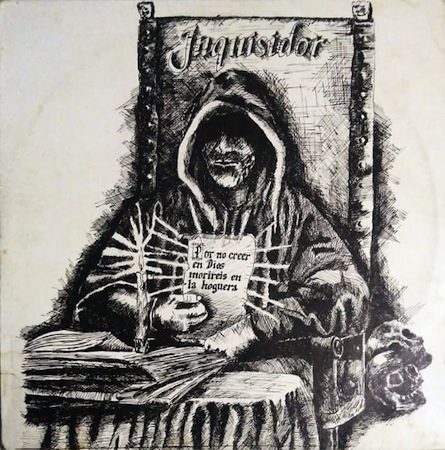
Inquisidor.... Ser sin Piedad. 1988. Avanzada Metálica

The massacre has been unleashed

The first album of the Mexican band Inquisidor sounds like a very long demo of an aggressive, insane band with a lot of potential. Demo? Yes, that's how it sounds like. The quality of the mix is so poor that it's difficult to correctly identify Felipe Chacón's drums, the microphones capture the reverberation of the room more than the instrument itself. Likewise, Baudelio Ayala's guitar has so much distortion that many times you have to imagine the notes he is playing in the low notes, something that will delight a fan of the raw sound of hardcore punk and that will drive away those who don't like them anything but well-made productions. We can't talk about the bass either because he is more buried than the drums most of the time.

If this doesn't bury the album as a waste, it's precisely thanks to what it lays underneath all that noise. A first or second listen won't be enough to decipher all what happens between that tides of fuzz, reverb and distortion, but eventually the magic appears. Again, it's not a task for everyone and it is perfectly understandable if you decide not to continue listening after the first 60 seconds; however, for those who are used to listening to productions this precarious, they know that sometimes you find gold among demos that sound much worse.

Precisely, as wer're talking about content that takes time (and effort) to discover (and describe), you can highlight the difficulty of finding its structure. And it's because the verse + chorus + verse structure is almost never used in the tracks, it gives the feeling that you are listening to an infernal and evil rhapsody inside a torture chamber, which sometimes turns into an almost-theatrical proposal. Also, the name of the band fits like a glove, at times it seems that you are listening to a dungeon in times of the Inquisition.

What really stands out is Martín Huerta's vocal performance, which is one of the most authentic, uncompromising and totally dedicated to make the band sound like an act that you can't take lightly nor mess with. You just have to listen to it all in 'Descansa en Paz' or 'Führer' to realize that you are not listening to a group that plays just as a hobby. These songs, along with the rest of the second half of the album, show everything these guys were capable of since then.

Aside, there are the lyrics, full of rhetoric and a criticism not only towards religious institutions, but also towards society, that takes as a framework the references of religious imaginary; something much more mature than what at first glance you would think when hearing such howls and growls. They are a jewel that you will have to get to using the pamphlet as if you were using a map, because without it, you will understand little or nothing.

Certainly this is material that is not far from sounding like another demo for the band (really). But many think that the reason for records to exist is to sell tickets to concerts, without a doubt, it is something that this album achieved. It gives you some kind of expectation of what a live Inquisidor performance will be like and precisely, without recreating ourselves in the terrible production, you can guarantee that the band sounds much better in front of the crowd. It's hard to believe that an act like this has not only managed to record this material, that it has been commercialized and that the band was still active for many years afterwards; but also they continued to release more productions, luckily, better than this eventful debut.

Is this for you? We have already broken down the main reason why it might not be, but if you like the fierceness with which Paul Baloff delivered himself with each performance in Bonded by Blood, or if you like to revisit the obscurities of Morbid Visions de Sepultura or In The Sign of Evil from Sodom; we would recommend that you take a look at the Inquisitor, because underneath all that noise, there are jewels that have lasted to this day. Now, if you wish, you can also listen to some of the songs re-recorded with a better production although with the voice of Baudelio Ayala (who would take the reins of the voice since 1991) in their Antología 1.3 of 2014.


Personnel

Martín Huerta                  - voz

Baudelio Ayala                - guitarra

Felipe J. Chacón             - batería

Ever Cázares                  - bajo


Reseña: Inquisidor - Inquisidor... Ser Sin Piedad (1988)


Inquisidor.... Ser sin Piedad. 1988. Avanzada Metálica

La masacre se desató

El primer disco de la banda mexicana Inquisidor suena a un demo muy largo de una banda agresiva, demencial y con mucho potencial. ¿Demo? Sí, a eso suena. La calidad de la mezcla es tan mala que cuesta trabajo identificar correctamente la batería de Felipe Chacón, los micrófonos captan más la reverberación del cuarto que del instrumento en sí. Al igual, la guitarra de Baudelio Ayala cuenta con tanta distorsión que muchas veces tienes que imaginarte las notas que está tocando en los registros graves, algo que hará las delicias para un fanático del sonido crudo del hardcore punk y que ahuyentará a los que no gusten de nada que no sean producciones bien logradas. Del bajo tampoco podemos hablar debido a que está más enterrado que la batería la mayor parte del tiempo.

Si esto no lapida al álbum como un desperdicio es precisamente por lo que se encuentra debajo de todo ese ruido. Una primera o segunda escucha no te serán suficientes para descifrar todo lo que está ocurriendo entre esa marea de ruido, reverberación y distorsión, pero poco a poco, la magia aparece. De nuevo, no es una tarea para cualquier persona y es perfectamente entendible si decides no seguir escuchando después de los primeros 60 segundos; no obstante, para quien está acostumbrado a escuchar producciones así de precarias, sabe que a veces encuentras oro entre demos que suenan mucho peor.

Precisamente, porque es un contenido que toma su tiempo (y esfuerzo) descubrir (y describir), resalta mucho la dificultad para hallar su estructura. Y es porque casi nunca se recurre a la estructura verso + coro + verso… muchas veces, da la sensación de que estás escuchando una rapsodia infernal y maligna dentro de una cámara de tortura, que se convierte a veces en una propuesta teatral, si acaso cabe la descripción. Y le cabe como anillo al dedo el nombre de la banda, por momentos parece que estás escuchando un calabozo en épocas de la Inquisición.

Lo que sí destaca es la interpretación vocal de Martín Huerta, que es una de las más desenvueltas, sin compromisos y totalmente dedicada a hacer sonar a la banda como un acto que no puedes tomarte a la ligera. Sólo tienes que escucharlo dándolo todo en Descansa en Paz o en Führer para darte cuenta de que no estás escuchando a un grupo que toca sólo para pasar el rato. Estos temas, junto con el resto de la segunda mitad del disco, muestran todo de lo que eran capaces estos muchachos dese entonces.

Un tema aparte son las letras, llenas de retórica y una crítica no sólo hacia las instituciones religiosas, sino también hacia la sociedad y que toma como marco las referencias de la religión; algo bastante más maduro que lo que a primera vista pensarías al escuchar semejantes berridos y gruñidos. Son una joya a la que tendrás que llegar haciendo uso del panfleto cual si fuera un mapa, porque sin él, le entenderás poco o nada.

Ciertamente, este es un material que no dista mucho de sonar como otro demo para la banda (en verdad). Pero muchos opinan que la razón de que existan los discos es para vender entradas a conciertos, sin duda, es algo que logró este álbum. Te genera una expectativa de cómo será una presentación en vivo de Inquisidor y precisamente, sin volvernos a recrear en la pésima producción, puedes garantizar que la banda suena mucho mejor frente a la multitud (más les valdría). Cuesta trabajo creer que un acto así haya no sólo logrado grabar este material, que se haya comercializado y que la banda siguiera activa por muchos años después; sino que continuaron lanzando más producciones, afortunadamente, mejores a este accidentado debut.

¿Es para ti? Ya desglosamos la principal razón por la que podría no serlo, pero si gustas de la fiereza con la que Paul Baloff se entregaba con cada interpretación de Bonded by Blood, o si te gusta revisitar las oscuridades de Morbid Visions de Sepultura o In The Sign of Evil, de Sodom; te recomendaríamos que le eches un vistazo a Inquisidor, porque debajo de todo ese ruido, se encuentran joyas que han perdurado hasta nuestros días. Ahora bien, si lo deseas, también puedes escuchar algunas de las canciones regrabadas con una mejor producción aunque con la voz de Baudelio Ayala (quien tomaría las riendas de la voz desde 1991) en su Antología 1.3 de 2014.


Personal

Martín Huerta                  - voz

Baudelio Ayala                - guitarra

Felipe J. Chacón             - batería

Ever Cázares                  - bajo